



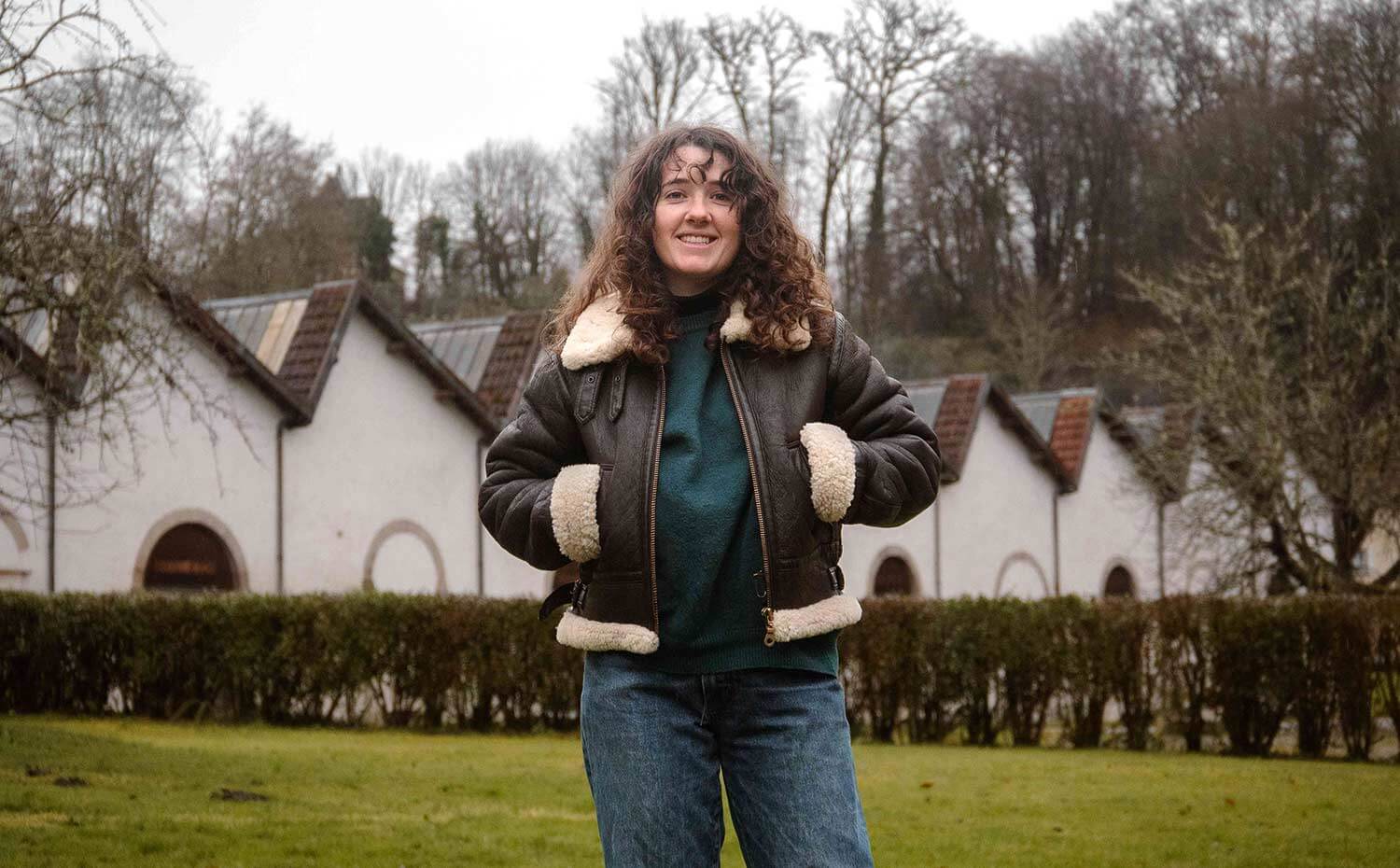
ARTIVIEW by ARCHES® Yalhma Robette, an eco-social designer with a keen interest in rural stories
© Yalhma Robette
Introduce yourself briefly
My name is Yalhma Robette and I’m an eco-social designer. I grew up in the Var department and studied in northern France at the École supérieure d’art et de design de Valenciennes. My work then began to take shape around rural communities during a 10-month residency in Ambert, in the Massif Central. I’ve just wrapped up another residency in the Vosges department.
What are the subjects that inspire you?
In general, I’m interested in the ecological and social questions raised by design in rural areas. I use a collaborative approach tailored to each context, working closely with local stakeholders and residents to rethink how people, the environment and the objects around us relate to one another, while also bringing the unique heritage of each place to the fore. The subjects that inspire me are often local stories, particularly those involving women. I adopt a sensitive approach, seeking to offer a new perspective on rural life and our tangible and intangible heritage, inviting people to reflect collectively and deeply on the way we live and coexist with our environment. I also explore themes such as forest fires and our relationship with water, whenever they’re relevant to the place where I’m working.
Can you tell us about the Almanac of La Vôge-les-Bains?
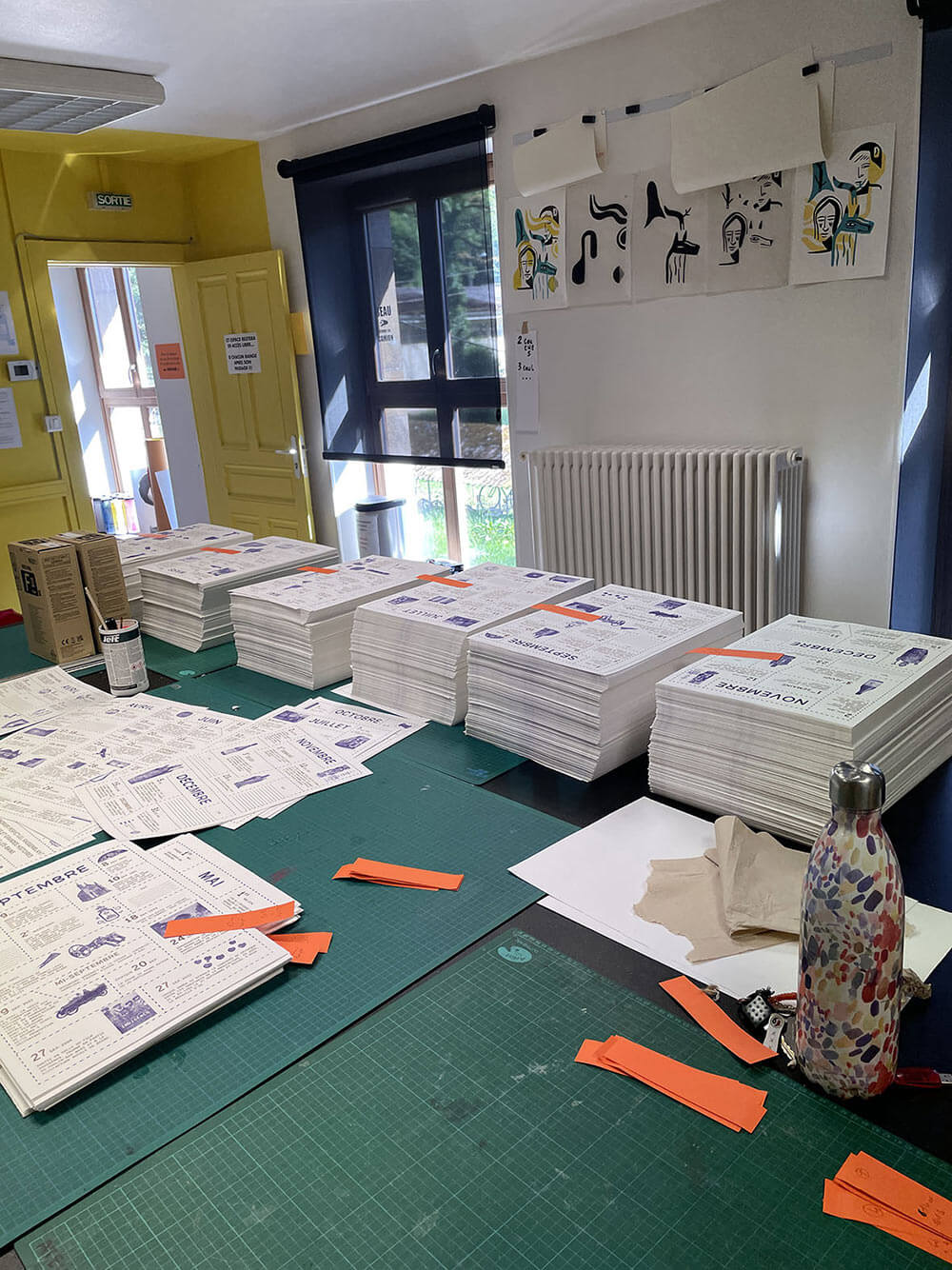
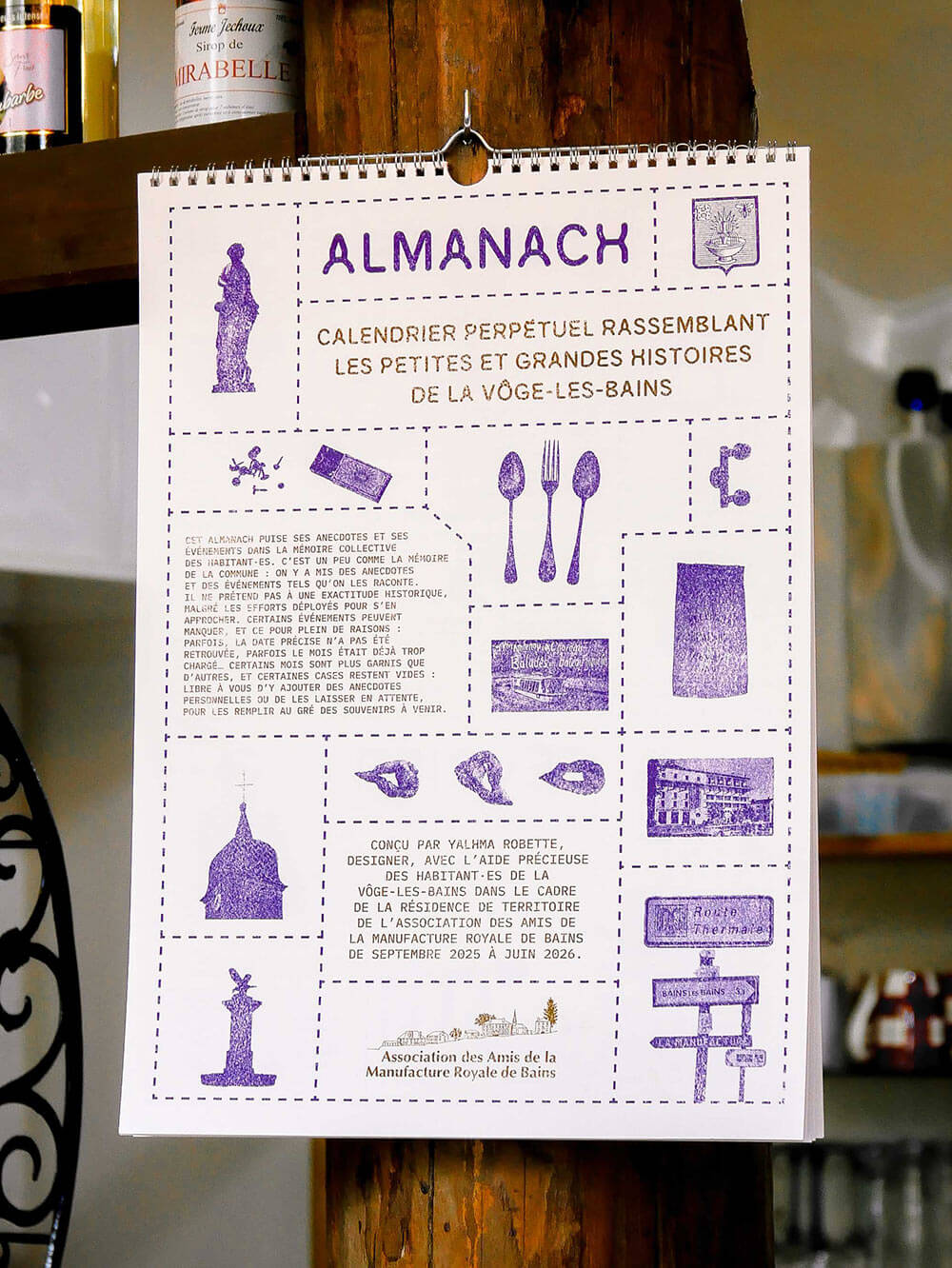
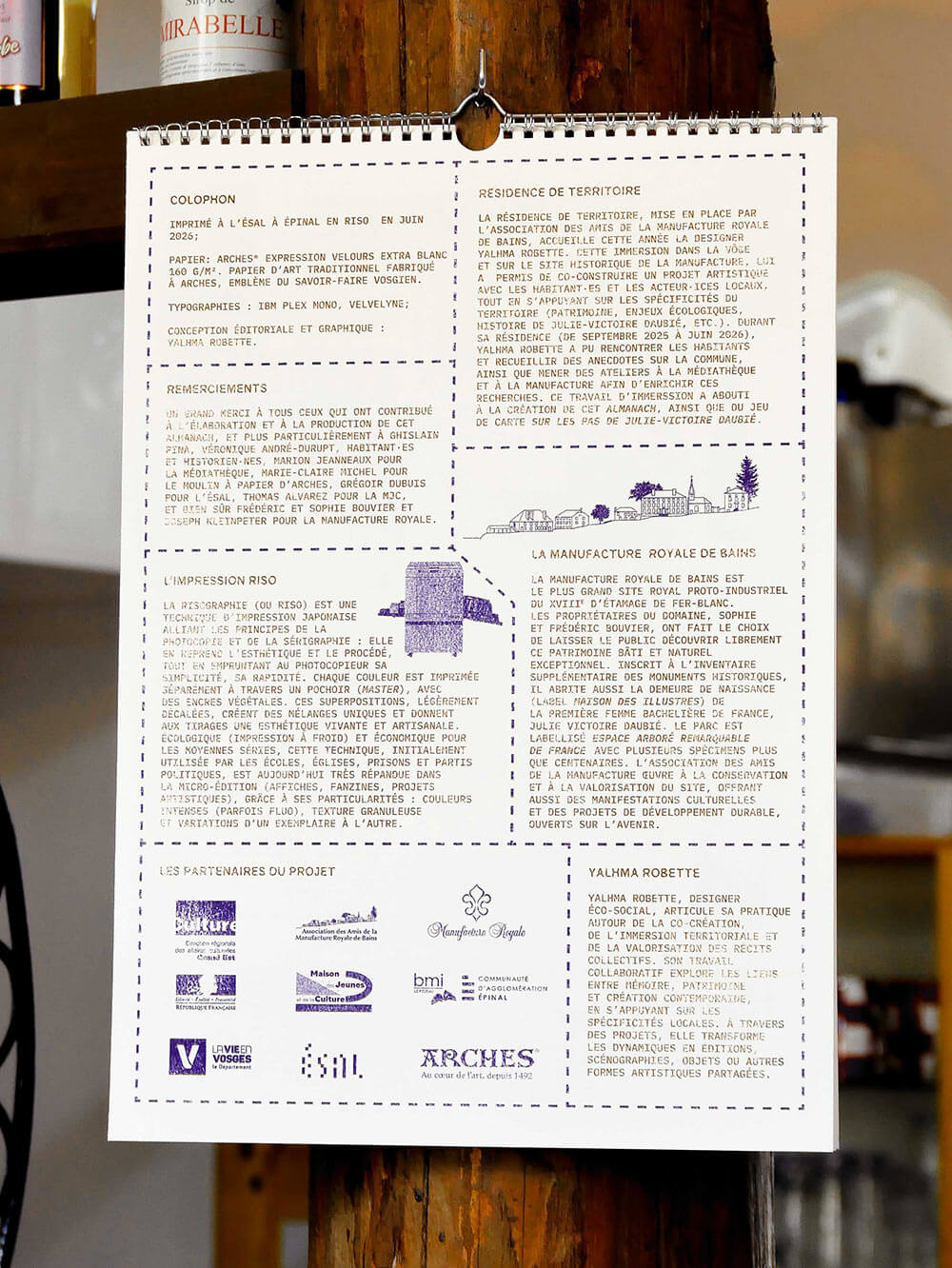
During my community-based residency at the Manufacture Royale de Bains, I created an almanac featuring anecdotes from La Vôge-les-Bains. The idea grew out of my time spent exploring the area and talking to local people, who had all kinds of wonderfully strange stories to share about the town. La Vôge-les-Bains is a new municipality made up of Harsault, Hautmougey and Bains-les-Bains, and I thought it would be interesting to bring all these anecdotes together. The result is a perpetual calendar that finds its way into people’s homes. Each page represents a month; it’s divided into several boxes, with one anecdote in each box. Most of the boxes are filled in, but some have been left empty for residents to fill with a personal anecdote – or even one that hasn’t happened yet! The calendar was risograph-printed at the ÉSAL art school in Épinal.
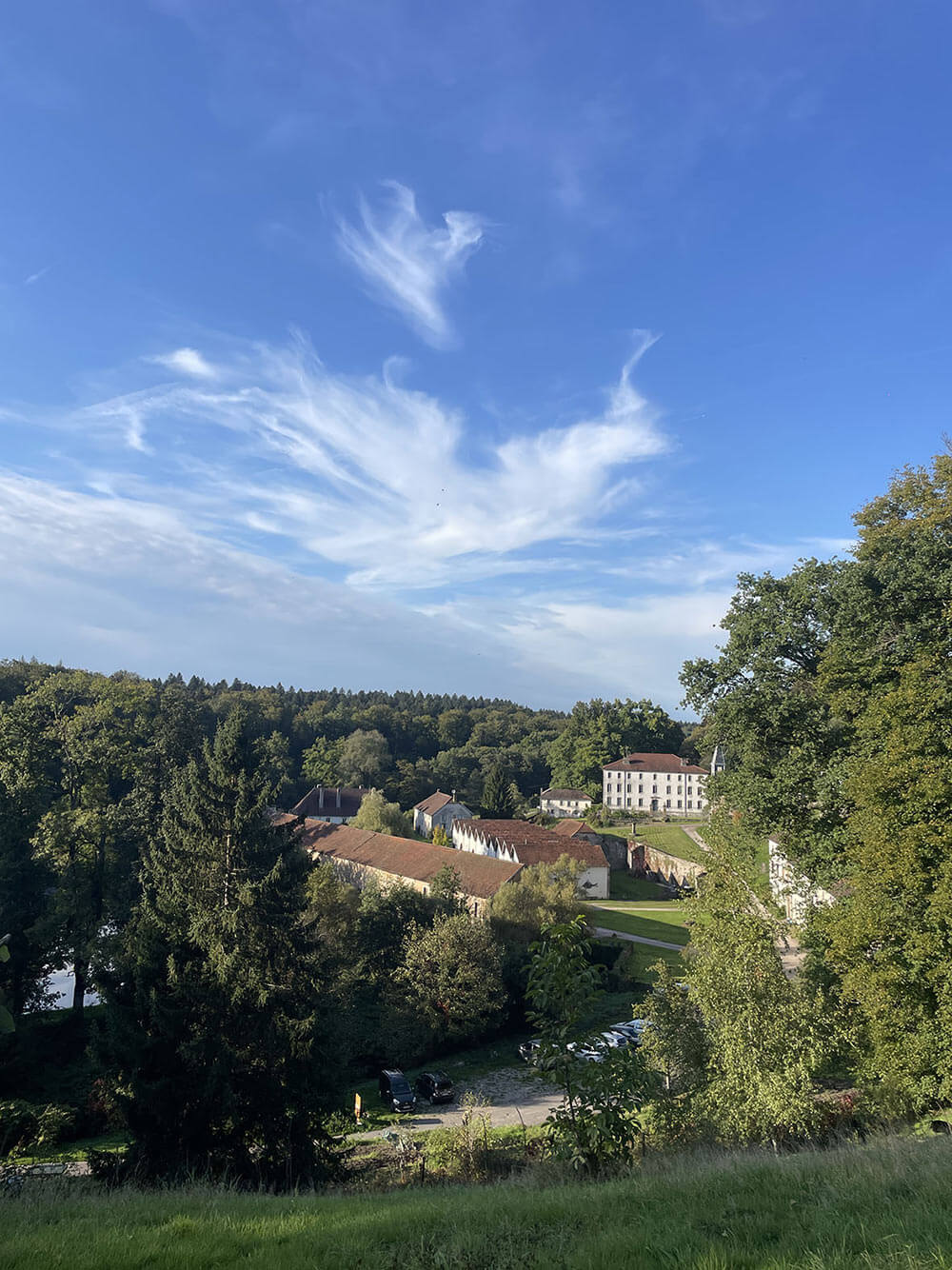
Manufacture Royale de Bains
Can you explain the risograph printing process?
Risograph or riso printing is a Japanese printing technique that brings together elements of photocopying and screen printing: it combines the visual qualities of screen printing with the speed of photocopying. Each colour is printed separately using a stencil called a “master”. The resulting layers create slight shifts in alignment, produce unique colour blends and give the prints a vibrant, handcrafted look. It’s a cold printing process using vegetable-based inks, making it an eco-friendly and economical option for medium-sized print runs. This technique was originally used by schools, churches, prisons and political parties. Today, it’s very popular in small-scale publishing – for posters, fanzines and art projects – thanks to its distinctive qualities: intense and sometimes fluorescent colours, a grainy texture and variations between individual copies.
Why did you choose ARCHES® Expression paper for this project?
The aim of this community-based residency is to bring together different stakeholders from the same area and its residents. ARCHES® Expression paper is part of the region’s rich paper-making heritage, and its outstanding quality made it a natural choice. It’s also ideally suited to this project: it won’t yellow over time, it absorbs the ink beautifully, and its subtle texture gives the finished print added character.
Do you have any other projects on the go or planned?
Yes, I’ve just completed another residency in the Alpes-Maritimes department, supported by Ateliers Médicis, for a project called La menace du feu. It involved a collective investigation with a class of 8- to 10-year-olds, followed by a public-space installation to raise awareness among children and local residents about the unfortunately timely issue of fires. Looking ahead, I’ll be starting a residency in the Nord-Picardie area exploring issues related to water.