



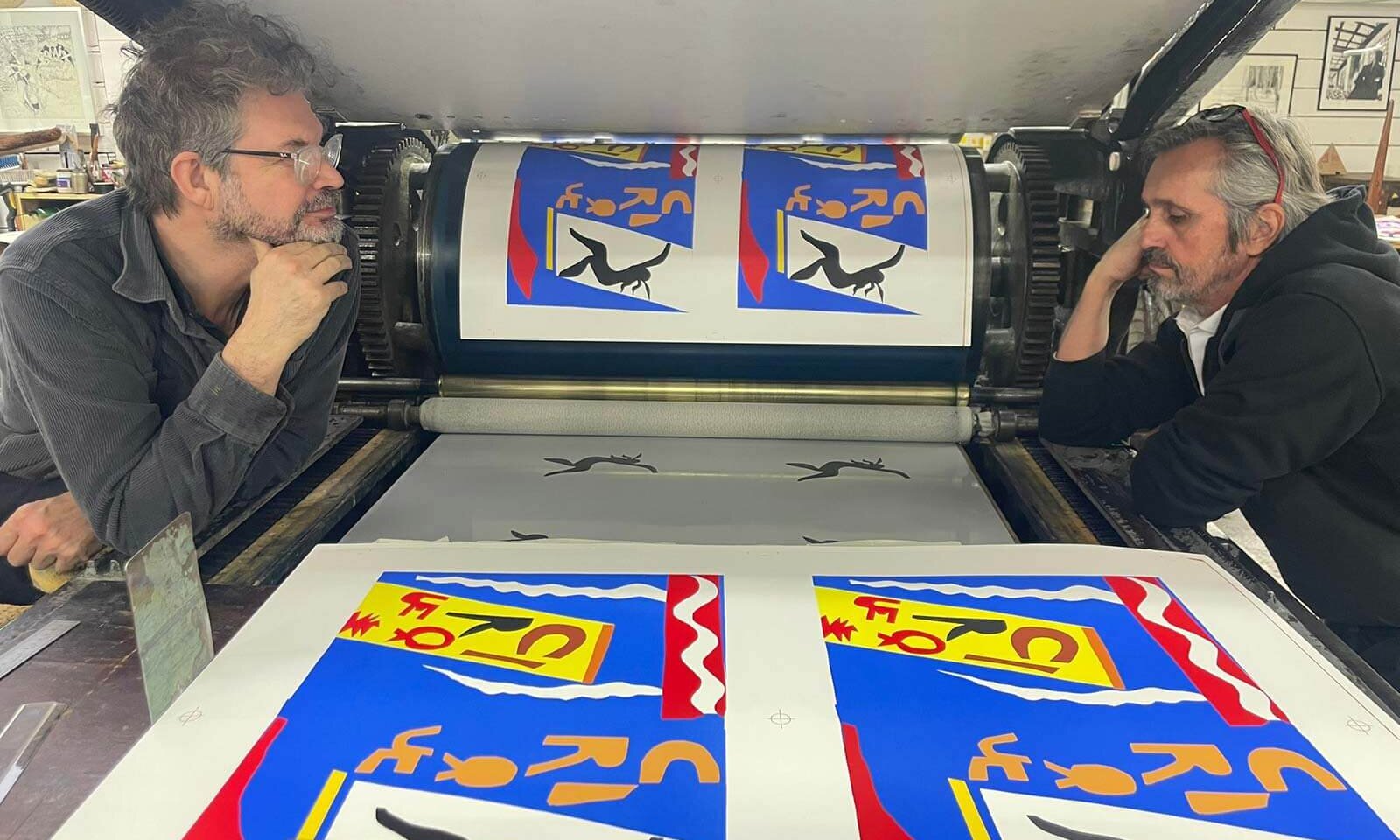
ARTIVIEW by ARCHES® Nicolas Draeger – Éditions Anthèse
Introduce yourself briefly
My name is Nicolas Draeger and I run Éditions Anthèse in Montrouge. Twenty years ago, I set up a lithography workshop because I had several projects for artist’s books I wanted to develop. I come from a family of printers – for six generations now, we’ve been “putting ink to paper”, and the first printer in the family was also named Nicolas Draeger (1813-1910). So it was inevitable that I would carry on the tradition!
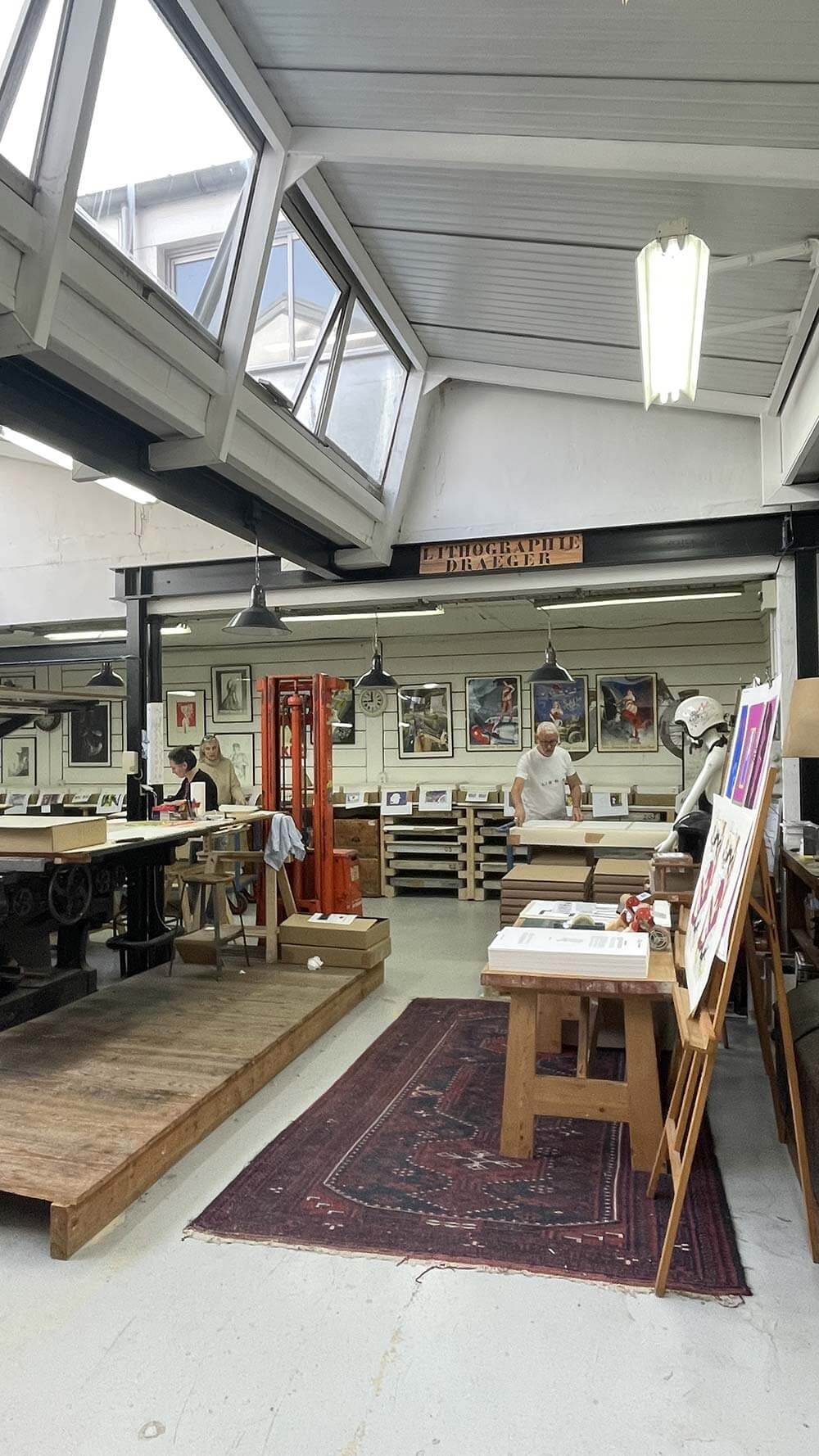
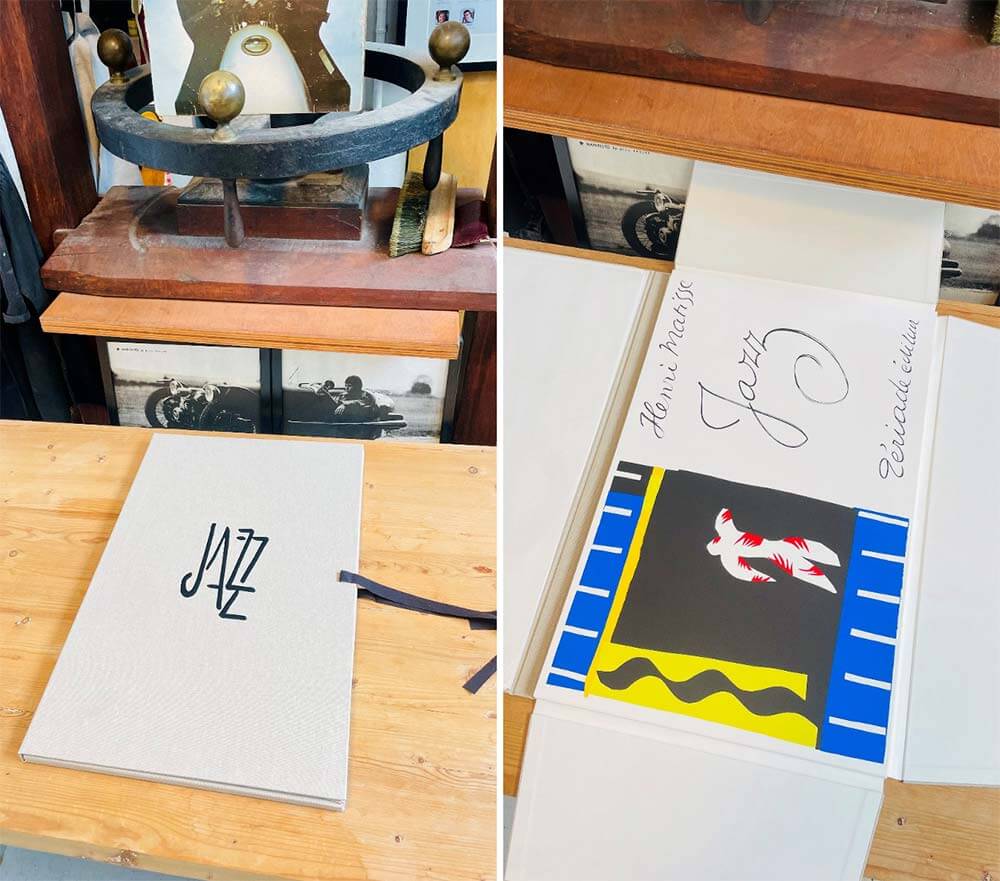
We actually revived the workshop to produce artist’s books. The first one we reprinted, in 2004, was Henri Matisse’s Jazz, because in 1947 it had been partly printed and assembled by my family. It’s a book I’ve always known, so I decided to recreate it. We felt the best approach was to use a flatbed press, working colour by colour.
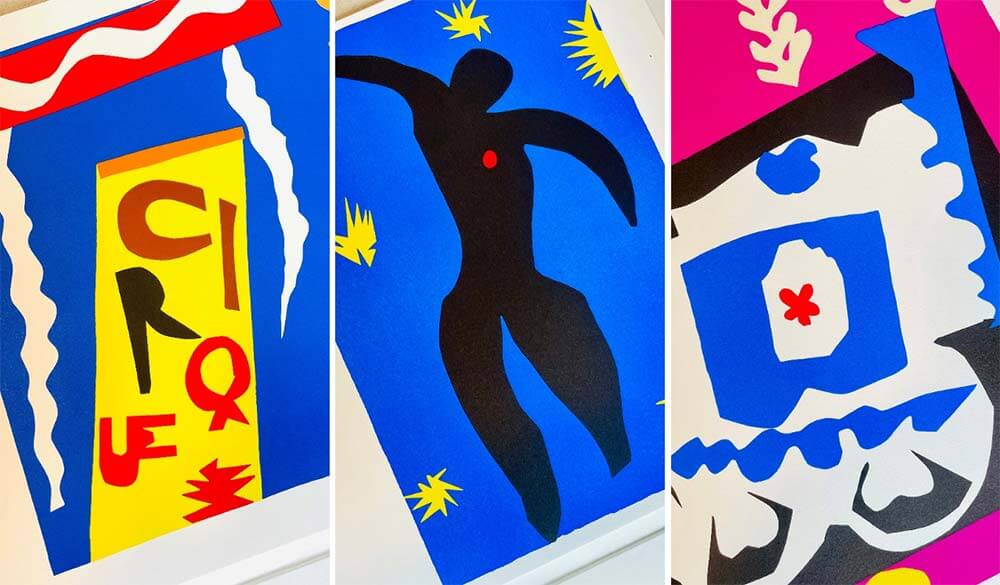
For the 250 copies of the first 1947 edition, all the colour plates were produced at the Mourlot workshop on Velin d’ARCHES® paper, using the pochoir (stencil) technique with gouache, based on Matisse’s original collages. The main challenge was to faithfully reproduce the vivid colours of the cut-outs. The pochoir technique emerged as the obvious choice. The same gouaches used by Matisse were selected for printing, to preserve the luminosity of the original pieces. Each colour was applied separately using hand-cut stencils. The text plates, meanwhile, were produced in Montrouge by my family, who also assembled the book.
What techniques do you use?
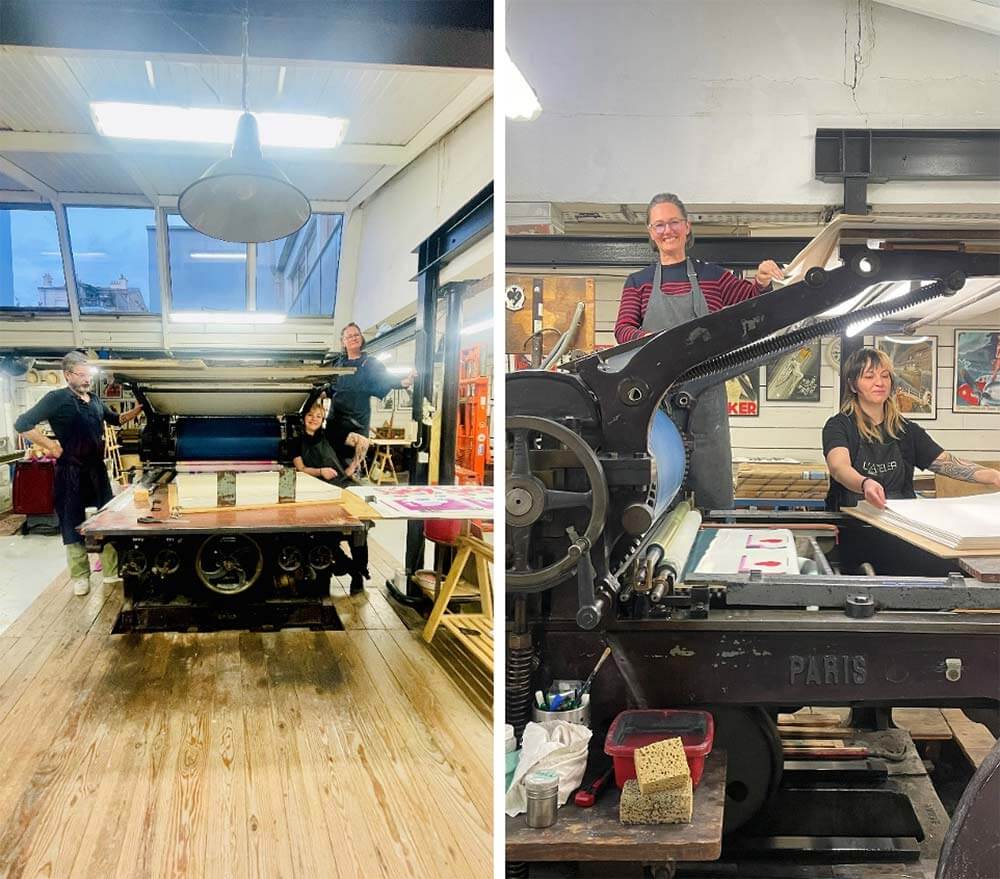
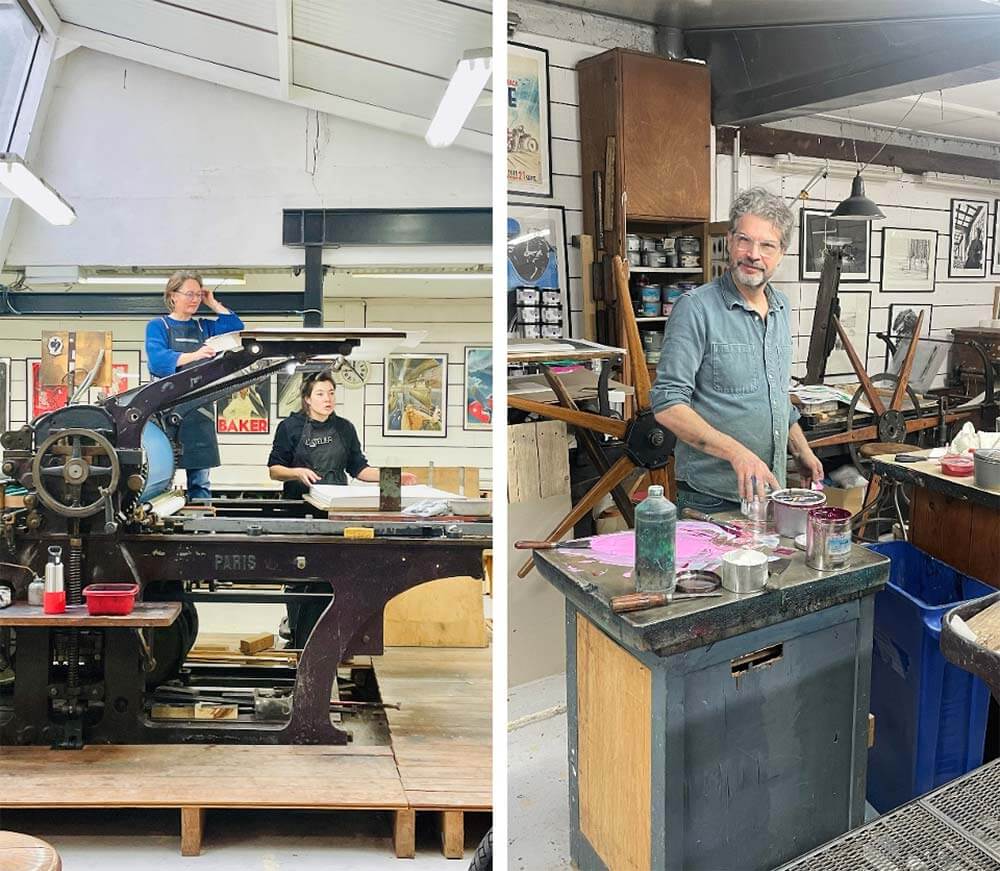
We currently specialise in lithographic printing. We have a Marinoni-Voirin* flatbed press in Colombier format (63 × 90 cm paper), as well as two hand presses. A great deal of artists come to the workshop, drawing directly on stone before we print their works. We work with artists, galleries and various institutions. We work quite a bit with the Matisse Museum in Le Cateau-Cambrésis. We also worked with the Centre Pompidou for its ongoing exhibition. Our print runs are always small – between 20 and 50 copies. Sometimes we produce more, depending on the artist and the commission – we always remain flexible.
The term “flatbed press” comes from the flat printing system it uses. The sheet passes around a cylinder, which applies pressure to it, but only the sheet moves – the ink rollers and printing bed remain flat.
* The Marinoni-Voirin flatbed press dates from the very late 19th to the early 20th century. It replaced the hand press, as it was powered by a small motor that ran initially on steam and then later on electricity. This press allows us to produce very large formats on stone, zinc and aluminium lithographic plates.
What are the subjects that inspire you?
I have another passion outside printing: motorcycles. What’s funny is that lots of artists ride motorcycles. We work with a lot of comic-book artists, and many of them are bikers as well. We used to host evenings here with biker friends, including some comic-book artists. Some nights, we’d set out our stones and ask them to draw on them. We also collaborate with artists who specialise in posters in general. One of them, Lorenzo, produces lots of posters for motorcycle events. We also work with another artist with whom we produce at least one or two editions a year. His name is Romain Hugault, and he writes comic books on the theme of aeroplanes. We’ve worked with people like Frank Margerin. In the field of comic books, we must have published work by more than 100 artists to date. Some have produced several editions with us, while others simply wanted to try the experience once. It’s interesting, because nowadays they tend to work more and more with tablets, which means that picking up a pencil again and drawing on stone is a valuable exercise for them.
Tell us about the “Matisse” book
We’ve been printing Matisse’s work for almost 20 years now, and we’ve become something of Matisse specialists. We reprinted Henri Matisse’s Jazz in 2004. We first reached out to the Matisse heirs to get their permission. Then we worked closely with them on the colour proofs. In the end, they decided to trust us. I met Jean-Mathieu Matisse, the founder of Maison Matisse, four or five years ago. We worked with him to reissue previously unpublished Matisse plates from his personal collection. What he really wanted was to produce a new edition of Henri Matisse’s Jazz. We’d been discussing the project for the past two years, and with the Matisse exhibition coming up at the Grand Palais, he got in touch with the Centre Pompidou, which decided to publish a new edition devoted solely to Matisse’s colour plates. So we worked with the Centre Pompidou on the project, starting in December 2025. Printing the complete set of plates took us seven weeks. The book includes 20 colour plates, amounting to roughly 120 colours altogether. To reproduce the colours with the greatest possible accuracy, we asked for a copy of the 1947 edition to be lent to us.
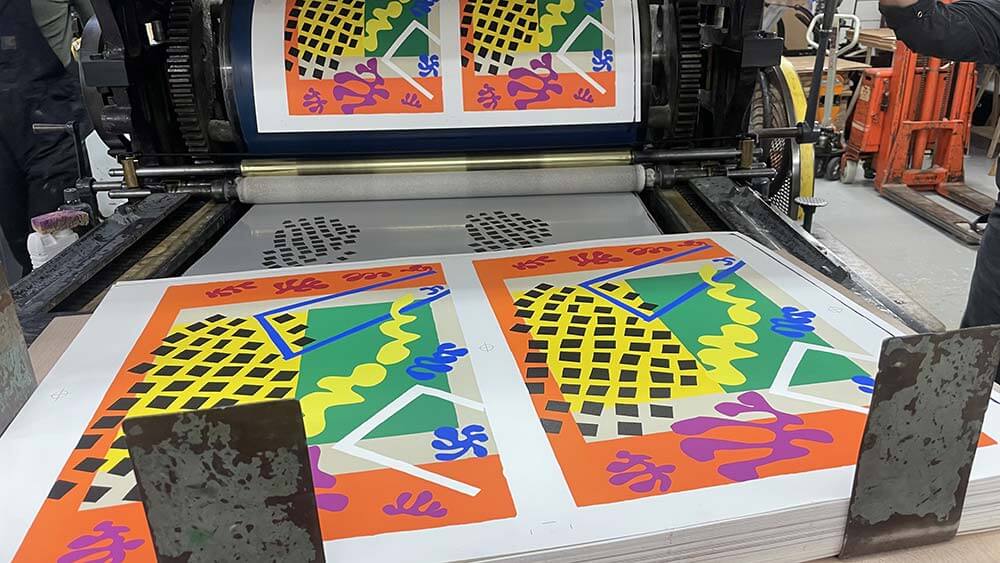
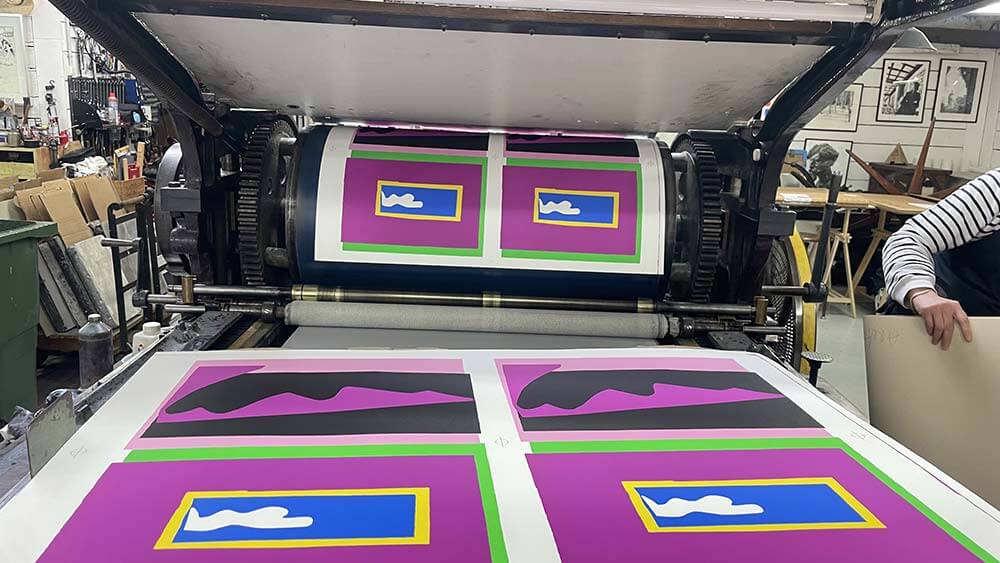
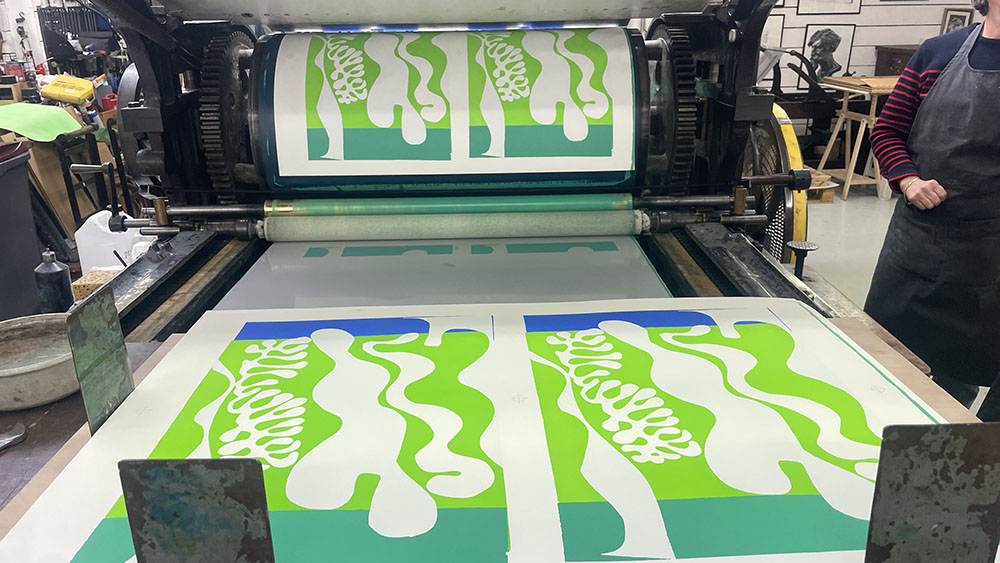
What was complicated about this book was that some of the colours weren’t easy to reproduce. Back in 2004, we’d been able to have two specific colours specially remade: fuchsia and the characteristic “Matisse” blue. Unfortunately, the manufacturer that had produced the blue some 20 years earlier still had the formulas, but could no longer find the original pigments. So we went with a different blue, which we adapted to make our own mixes and recreate the colour. It wasn’t simple, because the original edition had been produced using gouache. Here, we were working with printing inks, so light was reflected differently on the colours. Printing colour by colour or tone by tone is always complicated. The initial lighter shades have to be strong enough so they won’t disappear once more intense colours are printed over them. In lithography, sometimes we start with blacks – it all depends on the subject and the layers we’re seeking to create. Most of the time, though, we begin with the lightest colours, so we don’t have to clean the press as often. After each colour, we have to clean the entire press, including all the rollers, before we can start on the next shade. If we begin with dark colours and then need to print lighter ones afterwards, the cleaning process is very different. So it all has to be planned carefully in advance.
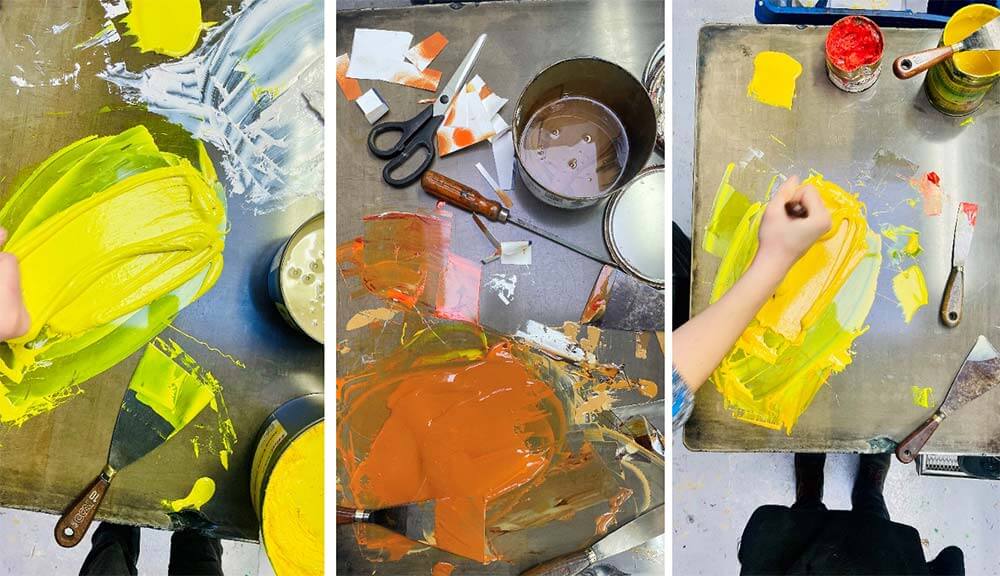
Why did you choose Velin BFK Rives® paper for the limited edition of this book?
We’ve been working with this paper for a very long time. Today, it’s hard to find sufficiently heavy grammages of paper in the formats we need. On top of that, we needed a large number sheets, which was an additional challenge. The sheets also had to be perfectly identical, with no variation in colour between two production runs. Even if the difference in colour may seem minimal, when two sheets are placed side by side, that’s all you can see.
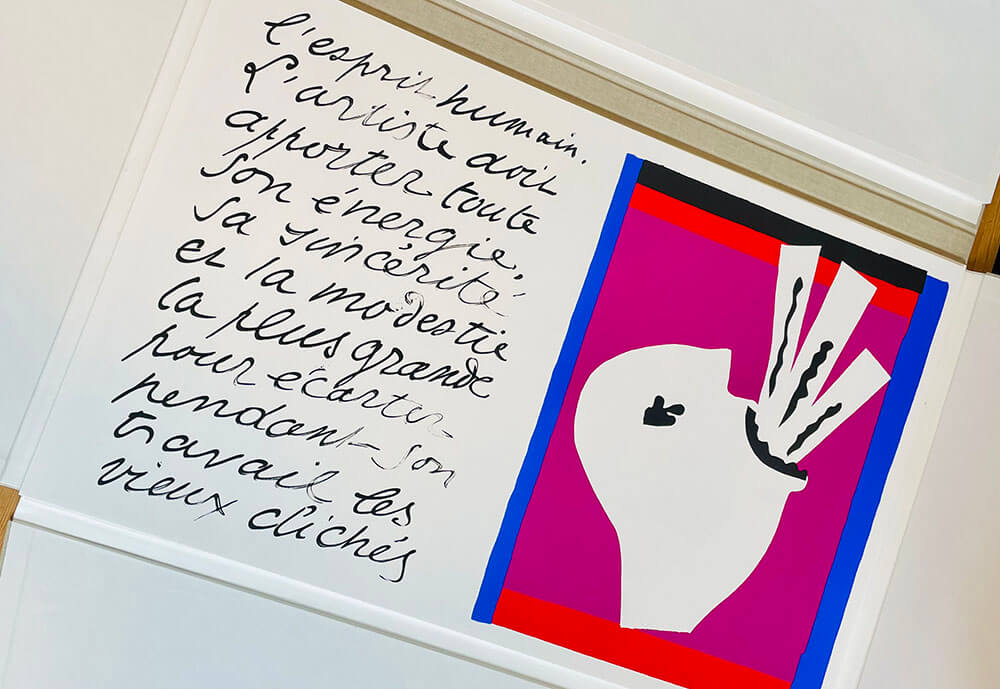
At first, the book consisted solely of cut-outs. Henri Matisse explained that “cutting into colour allowed him to draw directly with colours”. Once the 20 plates had been completed, he decided to add handwritten text between them, to provide moments of rest for the eye.
ARCHES® paper in one word?
We work exclusively with rag and cotton papers, because our presses use a great deal of water. That means we need papers capable of absorbing water, and papers that dry through absorption rather than oxidation. ARCHES® papers, including Velin BFK Rives® paper, are perfectly suited to this type of work. And then our customers expect high-quality papers. Saying that a piece has been printed on ARCHES® conveys a sense of historical quality and lasting durability.
If I had to sum it up in one word, it would be quality. When you open a pack of ARCHES® paper, there are no surprises – you know exactly how the paper will behave.
In your opinion, who is the greatest artist of all time? Why?
Right now, I’d say Matisse! I love Matisse’s colours, the way he layered them, and all the work he did with his cut-outs. Our printing method allows us to render and preserve the intensity of those colours, precisely because we print one colour at a time.
Do you have any other projects on the go or planned?
We have a small series that we’re starting tomorrow for a gallery that produces books for its exhibitions. A small lithograph is inserted into every book. We also have a large series of posters to produce for Lorenzo, on the themes of motorcycles, cars and women. And we’re going to reprint a five-colour poster for Romain Hugault.
“Matisse. 1941–1954” exhibition from 24 March to 26 July 2026 at the Grand Palais in Paris:
https://www.grandpalais.fr/en/program/matisse-1941-1954